The Art and Utility of Geometric Shapes Repeat Patterns
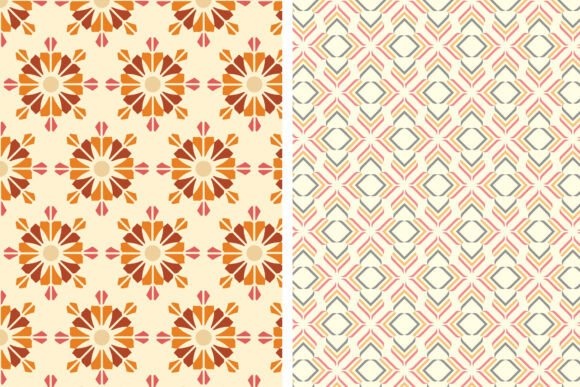
In the vast landscape of visual communication, few elements are as universally recognized yet endlessly versatile as geometric shapes repeat patterns. From the intricate tiling of ancient Islamic architecture to the bold, minimalist prints found on modern streetwear, these designs serve a dual purpose: they satisfy an innate human desire for order while simultaneously offering a canvas for boundless creativity. When combined with a spectrum of bold colors and vibrant designs, geometric abstraction transforms from simple decoration into a powerful language that speaks to professionals, consumers, creators, and researchers alike.
This article explores the multifaceted world of abstract geometric shapes repeat patterns for prints. We will move beyond surface-level aesthetics to examine the mathematical foundations, the psychological impact of color and form, and the practical applications across diverse industries. Whether you are a textile designer seeking inspiration or a business owner looking to brand your products, understanding the mechanics behind these repeating motifs is essential for creating impactful visual experiences.
The Foundation: Order Within Chaos
At its core, a repeat pattern is a method of organizing space. Unlike organic forms that mimic nature's irregularity, geometric shapes rely on precision, symmetry, and logic. The fundamental building blocks—squares, triangles, circles, hexagons, and polygons—are arranged according to specific rules of repetition. This creates a rhythm that the human eye finds inherently pleasing. Psychologically, our brains are wired to seek patterns; when we encounter a well-executed Geometric Shapes Repeat Patterns design, it provides a sense of stability and predictability.
The beauty of this medium lies in its ability to balance structure with chaos. A rigid grid can feel sterile if not treated correctly, but introducing variation through color gradients, overlapping layers, or slight distortions breaks the monotony. This is where the concept of "vibrant designs minimal artwork" becomes crucial. Minimalism does not mean empty; it means intentional. By reducing the visual noise to essential shapes and lines, designers force the viewer to focus on the interplay between the positive and negative spaces. The result is a clean, sophisticated look that remains legible even at small scales, such as on a mobile screen or a fabric swatch.
The Psychology of Color in Abstract Geometry
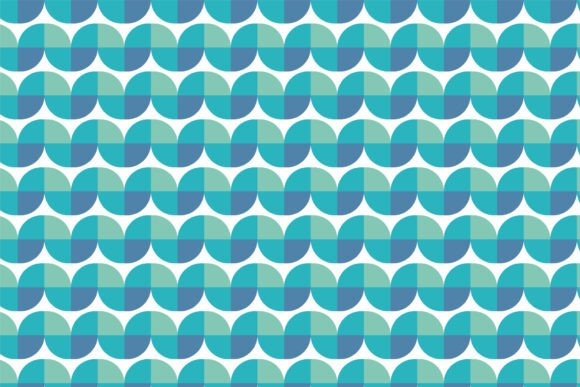
While the shape provides the skeleton, color provides the soul. A spectrum of bold colors can completely alter the perception of a geometric arrangement. Consider a simple tessellation of hexagons. If rendered in monochromatic grays, the design feels industrial, technical, and perhaps cold. However, shift those same hexagons to a gradient of electric blue to deep violet, and the pattern suddenly feels futuristic and energetic. Conversely, earthy tones like terracotta, olive, and ochre applied to triangular repeats evoke a sense of warmth and tradition.
- High Contrast: Pairing complementary colors (e.g., orange and blue) within a geometric grid creates immediate visual tension and excitement. This is often used in advertising materials to grab attention quickly.
- Harmonious Gradients: Using analogous colors that transition smoothly from one shape to another creates a fluid, soothing effect. This approach is popular in interior design textiles where a calming atmosphere is desired.
- Neon Accents: In the realm of digital art and modern fashion, neon hues against stark black backgrounds highlight the sharp edges of angular shapes, emphasizing the "bold" aspect of the design.
The choice of color palette is not merely aesthetic; it is strategic. For educators, using distinct colors in geometric diagrams helps students differentiate variables. For hobbyists, choosing colors that match a specific mood allows for personalized expression. The versatility of abstract geometric shapes repeat patterns for prints ensures that there is a chromatic solution for every emotional or functional requirement.
Diverse Applications Across Industries
The utility of geometric repetition extends far beyond the canvas. Its structured nature makes it adaptable to almost any medium. Let us explore how different sectors leverage these designs to achieve their specific goals.
Fashion and Textile Design
In the fashion industry, geometric shapes repeat patterns are a staple. From the classic houndstooth and plaid to avant-garde deconstructed prints, geometry defines eras. The scalability of vector-based geometric designs allows them to be printed on everything from silk scarves to heavy denim without losing resolution. Designers often use these patterns to create optical illusions, making garments appear larger, smaller, or more dynamic depending on the angle of the light. The trend toward "minimal artwork" has led to a resurgence of subtle, tonal geometric prints that offer texture without overwhelming the silhouette.
Interior Architecture and Wallcoverings
For architects and interior designers, wall coverings featuring abstract geometric shapes are a tool for manipulating space. Vertical stripes formed by rectangular repeats can make a ceiling appear higher, while horizontal bands can widen a narrow room. Bold, colorful geometric wallpapers are increasingly used in commercial spaces like co-working offices and retail stores to inject personality and energy into otherwise neutral environments. The durability of geometric prints also makes them ideal for high-traffic areas, as the repetitive nature helps camouflage minor wear and tear better than large, singular images.
Digital Interfaces and Branding
In the digital realm, geometric patterns serve as background textures for websites, apps, and branding materials. They provide depth without distracting from the primary content. A subtle, low-opacity geometric mesh can add a layer of sophistication to a corporate website, signaling innovation and precision. Startups often utilize vibrant, abstract geometric logos and backgrounds to convey a sense of technological advancement and forward-thinking. The modular nature of these shapes aligns perfectly with responsive web design, allowing elements to scale seamlessly across different devices.
Educational Tools and Research
Researchers and educators utilize geometric patterns to teach complex concepts. Tiling theory, fractals, and symmetry groups are often visualized through colorful geometric repeats. These visual aids help learners grasp abstract mathematical concepts by providing concrete examples. Furthermore, in fields like data visualization, heat maps often employ geometric grids to represent data density, turning raw numbers into intuitive, colorful landscapes that are easier to interpret.
Technical Considerations for Implementation
Creating effective Geometric Shapes Repeat Patterns requires more than just artistic intuition; it demands technical precision. The success of a pattern often hinges on the seamless join. When a pattern tiles, the edge of the image must match perfectly with the opposite edge so that no visible seam appears when repeated infinitely. This is achieved through careful planning in design software, ensuring that elements crossing the boundary reappear identically on the other side.
Resolution is another critical factor. While geometric shapes are mathematically defined and can be scaled infinitely without pixelation (in vector formats), the final output depends on the printing or display technology. For large-scale prints, such as murals or banners, the resolution requirements are lower than for fine details on jewelry or smartphone screens. Designers must understand the difference between raster and vector workflows to ensure that the spectrum of bold colors remains vibrant and accurate throughout the production process.
Color management is equally vital. What looks vibrant on a monitor may appear dull in print due to differences in color gamut (RGB vs. CMYK). Professionals must calibrate their workflow to account for these shifts, ensuring that the intended vibrant designs translate faithfully to the physical medium. This attention to detail separates amateur attempts from professional-grade work.
The Evolution of Geometric Trends
Like all art forms, geometric patterns evolve. Historically, they were rooted in religious symbolism and mathematical perfection. Today, the trends lean towards hybridization. Modern designers are blending traditional geometric structures with organic, fluid elements, creating a fusion that feels both grounded and ethereal. There is also a growing movement towards sustainability in design, where geometric patterns are created using eco-friendly inks and recycled materials, reflecting a broader societal shift towards environmental responsibility.
The rise of generative design tools has further accelerated this evolution. Algorithms can now generate millions of unique variations of geometric shapes, exploring combinations that a human might never conceive. This has opened new frontiers for artists and businesses, allowing for hyper-personalized products. Imagine a customer selecting a specific color combination for a geometric pattern on a piece of furniture, generated in real-time by an algorithm. This level of customization was previously impossible at scale.
Selecting the Right Pattern for Your Needs
With so many options available, how does one choose the right design? The answer lies in the context of use. For a professional audience, such as a law firm or a financial institution, a structured, symmetrical geometric pattern in muted tones conveys trust and reliability. For a creative agency or a lifestyle brand targeting younger demographics, an asymmetrical, chaotic arrangement of colorful geometric shapes communicates innovation and fun.
Consider the environment where the pattern will live. High-contrast, bold patterns are excellent for outdoor signage or promotional materials that need to stand out from a distance. Subtle, low-contrast patterns are better suited for backgrounds in reading materials or clothing that needs to be worn frequently without causing visual fatigue. Understanding the relationship between the pattern and its surroundings is key to successful implementation.
Conclusion
The enduring appeal of geometric shapes repeat patterns lies in their infinite adaptability. They bridge the gap between the logical and the emotional, the mathematical and the artistic. Whether manifested as a vibrant print on a summer dress, a calming wallpaper in a home office, or a complex data visualization on a dashboard, these designs continue to shape our visual culture. As technology advances and our appreciation for design deepens, the potential for these abstract forms to inspire, inform, and delight remains limitless. By embracing the principles of structure, color, and repetition, creators can craft experiences that resonate deeply with audiences across the globe.