Set Seamless Patterns Islamic Style: A Comprehensive Evaluation
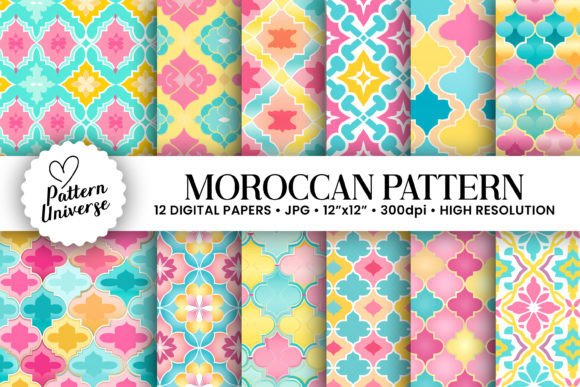
In the realm of digital design and traditional craftsmanship, Set Seamless Patterns Islamic Style represents a specific category of visual assets designed to create continuous, repeating motifs rooted in geometric and floral traditions. These patterns are characterized by their infinite nature, allowing them to tile horizontally and vertically without visible breaks or seams. For professionals ranging from web developers to textile manufacturers, understanding the nuances of these designs is essential for making informed decisions about their integration into various projects.
Understanding the Core Characteristics
The term "seamless" refers to the technical ability of an image to repeat indefinitely while maintaining visual continuity. When applied to Islamic style, this concept draws upon centuries-old artistic principles that emphasize symmetry, geometry, and intricate arabesque forms. Unlike freehand illustrations which may have distinct start and end points, these patterns are engineered to flow endlessly. This creates a sense of unity and infinity, often reflecting philosophical concepts found within the culture that inspired them.
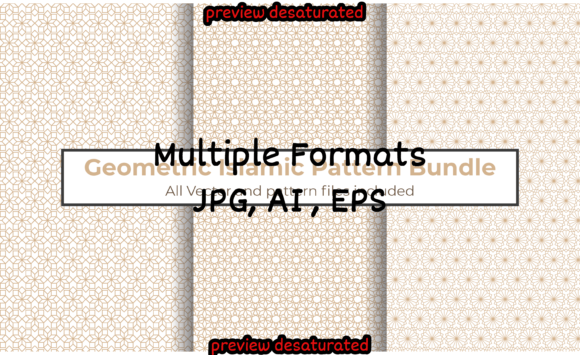
These designs typically utilize a modular approach. A single unit, known as a motif or tile, is repeated across a grid. The complexity can vary significantly, from simple interlocking stars to elaborate floral vines. The "breathtaking" quality mentioned in promotional materials often stems from the high level of detail and the mathematical precision required to ensure that the angles and curves align perfectly at the edges of the pattern.
Reasons for Interest in Islamic Seamless Patterns
Designers and creators often seek out Set Seamless Patterns Islamic Style for several practical and aesthetic reasons. The primary driver is versatility. Because these patterns are vector-based or rendered at high resolutions, they can be scaled up for large-scale applications like architectural cladding or down for small details on packaging without losing clarity.
- Aesthetic Refinement: The inherent balance and symmetry of Islamic geometry provide a sophisticated look that can elevate a design's perceived value.
- Cultural Relevance: For projects targeting specific demographics or requiring cultural authenticity, these patterns offer a respectful and accurate representation of heritage.
- Background Utility: In web development and digital artistry, seamless patterns serve as ideal backgrounds. They add texture and depth to interfaces without overwhelming the primary content, provided they are used with appropriate opacity.
Benefits and Tradeoffs of Implementation
Adopting these patterns involves weighing distinct advantages against potential limitations. On the benefit side, the most significant advantage is efficiency. Once a seamless tile is created or acquired, it covers large areas instantly, saving time compared to hand-drawing or placing individual elements. Furthermore, the "endless" nature ensures that no matter how much a user scrolls on a website or how large a fabric roll is printed, the visual integrity remains intact.
However, there are tradeoffs to consider. High-detail Islamic patterns can sometimes result in heavy file sizes, particularly if they are raster images (like JPEGs or PNGs) rather than vectors. This can impact page load speeds in web development if not optimized correctly. Additionally, the density of the design can compete with text or other UI elements. If the pattern is too complex or has high contrast, it may reduce readability, necessitating careful layering or background blurring techniques.
Situations Where These Patterns Are a Strong Fit
Set Seamless Patterns Islamic Style are particularly well-suited for specific scenarios where elegance and tradition are paramount.
- Textile and Fashion Design: The continuous nature of these patterns makes them ideal for fabrics. Whether for formal wear, home textiles, or accessories, the lack of seams allows for a fluid drape that looks uniform regardless of how the material is cut.
- Packaging and Branding: Luxury brands often utilize these motifs to convey exclusivity and heritage. Packaging for cosmetics, perfumes, or confectionery can benefit from the "extra flourish" these designs provide, creating an unboxing experience that feels premium.
- Digital Interiors and Web Design: For websites aiming for a boutique or cultural theme, using these patterns as subtle overlays or section dividers adds a layer of refinement. They work exceptionally well in hero sections or footer backgrounds where they can frame content effectively.
When Alternatives May Be Worth Considering
While these patterns are versatile, they are not a universal solution. There are situations where alternative design approaches might yield better results.
If the project requires a minimalist aesthetic, the intricate details of traditional Islamic patterns might feel cluttered. In such cases, simpler geometric shapes or solid colors would be more appropriate. Similarly, if the target audience is unfamiliar with the symbolism, relying heavily on these patterns could inadvertently alienate users who prefer modern, abstract, or organic styles.
Furthermore, for projects requiring highly specific custom branding, pre-made seamless sets might lack the unique identity needed. While they offer a "perfect touch" in many contexts, they cannot replace a fully custom illustration commissioned specifically for a brand's unique narrative. If the goal is to stand out through uniqueness rather than tradition, a bespoke design process is superior.
Practical Decision-Making Insights
To determine whether Set Seamless Patterns Islamic Style aligns with your goals, consider the following decision-making framework:
Assess the Context: Does the project context support the formality and complexity of the pattern? A corporate report might find it too ornate, whereas a wedding invitation suite would likely welcome it.
Evaluate Technical Constraints: Check the resolution requirements of your final output. For print, ensure the pattern is high-resolution to avoid pixelation. For web, verify that the file format supports transparency and compression to maintain performance.
Analyze Color Compatibility: These patterns often rely on specific color palettes. Ensure that the available themes match your brand guidelines. Some sets may require recoloring to fit a specific corporate identity, which adds a step to the workflow.
Consider the User Experience: In digital applications, test the pattern with actual content. Ensure that the text remains legible over the design. If the pattern distracts from the call-to-action buttons or navigation, it may need to be toned down or replaced.
Conclusion
Set Seamless Patterns Islamic Style offers a robust toolkit for designers seeking to infuse their work with grace, symmetry, and historical depth. Their ability to weave together into endless, exquisite designs makes them invaluable for textile, digital, and packaging applications. However, success depends on strategic application. By balancing the aesthetic appeal with technical constraints and user needs, creators can leverage these patterns to amplify their work effectively.
Ultimately, the decision to use these patterns should be driven by the specific requirements of the project. When the goal is to convey class, continuity, and cultural richness, these designs provide a strong foundation. When simplicity or modern abstraction is the priority, alternatives should be explored. With careful evaluation, these ever-flowing designs can serve as a powerful element in a designer's arsenal.