Rolled Paper Flowers Seamless Patterns: A Comprehensive Evaluation
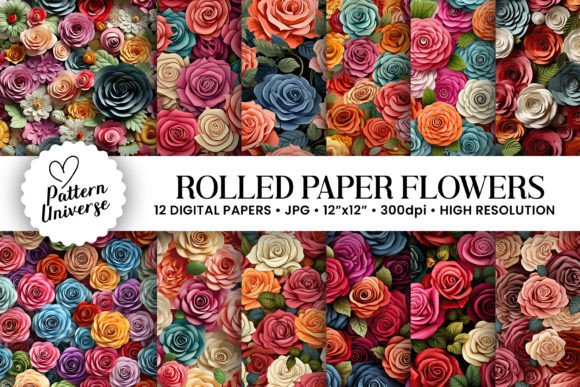
Digital crafting has evolved significantly, offering creators high-quality assets that streamline the design process. Among these resources, Rolled Paper Flowers Seamless Patterns have emerged as a versatile tool for designers, hobbyists, and small business owners. This specific collection features twelve distinct seamless patterns inspired by the delicate art of rolled paper flowers. Each pattern is designed to repeat infinitely without visible breaks, making them ideal for various applications ranging from physical packaging to digital backgrounds.
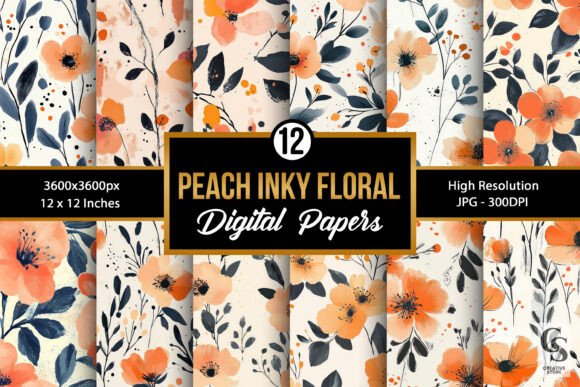
The primary value of this asset lies in its preparation for immediate use. The package includes 12 digital papers contained within a single zip file, ensuring easy organization and download. All files are provided in High-Resolution 300dpi with dimensions of 3600 x 3600 pixels (equivalent to 12" x 12"). These specifications are critical for users who require print-ready quality without pixelation or blurriness. Understanding the technical capabilities and practical applications of these patterns is essential before selecting them for a project.
Understanding Rolled Paper Flowers Seamless Patterns
A seamless pattern is a graphic design element that can be tiled horizontally and vertically to cover an area without showing the edges where the image repeats. When applied to the theme of rolled paper flowers, these patterns mimic the texture and visual rhythm of handcrafted floral arrangements. Unlike standard photographic images of flowers, seamless patterns provide a continuous background that integrates smoothly into larger designs.
This specific set offers a curated selection of twelve variations. While individual flower illustrations might be static, the seamless nature allows them to create a dynamic surface. The 300dpi resolution ensures that whether the user prints the pattern on a large scale or uses it for detailed card making, the intricate details of the "rolled" texture remain crisp. The 12x12 inch size is the industry standard for scrapbooking and digital card design, facilitating compatibility with most design software and cutting machines.
Primary Applications and Use Cases
The versatility of these patterns dictates their utility across multiple disciplines. Evaluating where these assets fit best helps users determine if they align with their current workflow.
- Gift Wrapping: One of the most direct applications is creating custom wrapping paper. By tiling the pattern, users can generate sheets that perfectly match the aesthetic of a handmade gift. The seamless nature ensures that when wrapping irregularly shaped boxes, the floral design does not break awkwardly at the seams.
- Greeting Cards and Invitations: For event planners and stationery designers, background textures are vital. These patterns serve as elegant backdrops for text overlays, providing a sophisticated look for weddings, birthdays, or thank-you notes without overpowering the message.
- Tumbler Wraps and Merchandise: Sublimation printing often requires high-resolution seamless files to wrap around cylindrical objects like tumblers. The 300dpi resolution supports the stretching and curvature required for such projects, ensuring the floral design looks cohesive on curved surfaces.
- Digital Backgrounds and Scrapbooking: Digital scrapbookers utilize these assets to layer photos and journaling elements. The consistent texture provides a unified theme for digital albums, while physical scrapbookers can print the pages to cut out shapes or create full-page layouts.
Evaluating Benefits and Technical Considerations
When considering the acquisition of Rolled Paper Flowers Seamless Patterns, several benefits stand out compared to sourcing individual images or creating patterns from scratch.
Time Efficiency: Creating a seamless pattern manually requires advanced skills in photo editing software to ensure no visible seams exist. Purchasing a pre-made set eliminates this technical hurdle, allowing the user to focus on the creative composition rather than the technical execution of the pattern itself.
Consistency: Because all twelve files come from the same collection, they share a cohesive color palette and style. This consistency is crucial for branding or thematic projects where mixing different styles could result in a disjointed final product.
High Resolution Utility: The 300dpi specification is a significant advantage. Many free or low-cost digital assets are limited to 72dpi, which is suitable only for screen display. For any project involving physical output—such as printing greeting cards or wrapping paper—the 300dpi requirement is non-negotiable. This set meets that standard, reducing the risk of reordering due to poor print quality.
Tradeoffs and Limitations
While the asset offers substantial utility, potential users must weigh certain limitations against their specific needs.
Style Specificity: The aesthetic is strictly defined by the "rolled paper" motif. If a project requires a more realistic botanical illustration, a watercolor wash, or a geometric abstraction, this specific set may not align with the desired visual direction. The stylized nature of rolled paper flowers creates a unique texture that may not suit every design brief.
File Format Constraints: The content is delivered as digital papers (likely JPEG or PNG). Users seeking vector-based graphics (SVG or EPS) for infinite scalability without any loss of quality will find these raster files limiting. While 300dpi is high for raster, it is not truly infinite scaling like vector art.
Single File Delivery: Although the convenience of a single zip file is noted, it also means the user receives the entire set. For a creator needing only one specific variation, the inclusion of all twelve files might result in unnecessary clutter in their library unless they organize them meticulously immediately upon download.
Situational Fit: Who Should Use This?
This collection represents a strong fit for crafters who prioritize efficiency and professional print quality. It is particularly suitable for:
- Small Business Owners: Those selling handmade goods, such as wrapped gifts or sublimated tumblers, need reliable, high-resolution assets to maintain product quality.
- Hobbyist Scrapbookers: Individuals looking to enhance physical albums with custom-printed pages will benefit from the 12x12 inch standard size.
- Digital Designers: Freelancers working on invitation suites or social media graphics who need quick, royalty-free backgrounds can save hours of work using these pre-made tiles.
Alternatives to Consider
If the specific "rolled paper" aesthetic does not match the project requirements, other avenues should be explored. Vector-based pattern libraries offer better scalability for large-scale banners or signage. Alternatively, stock photography sites offer individual flower images that can be arranged manually, providing more control over composition but requiring significantly more time.
For users interested in 3D effects, actual paper crafts might be preferable to digital simulations. However, for those needing flat, printable textures, digital seamless patterns remain the most cost-effective solution.
Decision-Making Insights
To determine if Rolled Paper Flowers Seamless Patterns align with your goals, evaluate the following criteria:
Output Medium: Are you planning to print? If yes, the 300dpi resolution makes this a viable option. If the project is screen-only, lower resolution options might suffice, though higher quality never hurts.
Design Theme: Does your project call for a textured, craft-inspired look? If the answer is yes, these patterns offer a unique charm that generic floral backgrounds lack.
Workflow Needs: Do you need to produce multiple variations quickly? Having 12 distinct options in one package allows for rapid prototyping of different designs without searching for new sources.
In conclusion, this digital asset pack serves as a functional bridge between traditional paper craft aesthetics and modern digital production. By understanding its strengths in resolution and application, alongside its limitations in style specificity, users can make an informed decision. Whether for personal hobbies or commercial ventures, these patterns provide a reliable foundation for creating cohesive, high-quality visual materials.