Seamless Sunflowers Patterns: A Comprehensive Evaluation
The visual landscape of design is often defined by the textures and motifs that ground a project. Among the most enduring and versatile motifs in nature, sunflowers offer a distinct aesthetic characterized by warmth, brightness, and organic structure. When these images are engineered into seamless patterns, they transform from simple illustrations into powerful background tools capable of defining an entire brand identity or product line. This evaluation focuses on a specific digital asset category: high-resolution, commercial-grade seamless sunflower patterns provided as 300 DPI JPEG files.
For designers, crafters, and business owners, the decision to incorporate this specific type of asset involves more than just selecting an image that looks appealing. It requires understanding technical specifications, licensing implications, and the practical application of the pattern across various mediums. The following analysis explores the utility of these 12 x 12 inch, high-resolution files to help you determine if they align with your current project requirements.
Understanding the Asset Specifications
To make an informed purchasing decision, one must first understand what constitutes a high-quality seamless pattern file. In the context of digital assets, "seamless" refers to a texture where the edges connect perfectly, allowing the image to repeat infinitely without visible breaks or lines. This tiling capability is essential for creating backgrounds for websites, wrapping paper, fabric prints, and packaging.
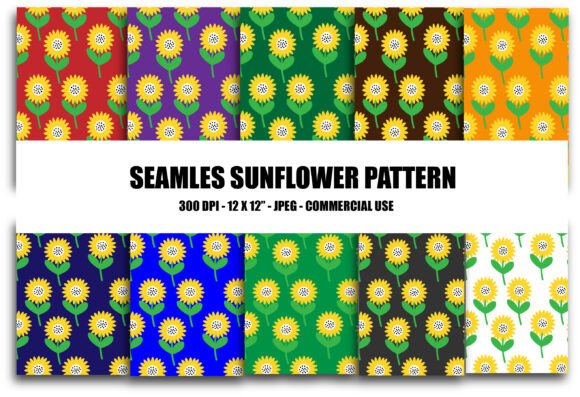
The specific configuration described—12 x 12 inches at 300 DPI—represents a significant standard in print production. The 300 dots per inch (DPI) resolution ensures that when the image is printed, it remains crisp and clear, avoiding the pixelation that plagues lower-resolution web graphics. The 12 x 12 inch dimension provides a manageable canvas size that can be scaled up for large formats while maintaining quality, or scaled down for smaller applications like social media headers.
The inclusion of 10 unique files in a single package offers immediate variety. Rather than committing to a single artistic interpretation, this volume allows for a cohesive yet diverse collection. Whether the designs feature hand-drawn sketches, watercolor washes, or geometric interpretations, having ten variations prevents visual monotony in a larger project scope.
Practical Applications and Use Cases
The versatility of seamless sunflower patterns makes them suitable for a wide array of industries. However, their effectiveness depends heavily on the intended output medium. Below are the primary scenarios where these assets provide the most value.
- Textile and Apparel Design: The 300 DPI resolution is critical here. For screen printing or direct-to-garment (DTG) printing, high resolution ensures that the fine details of the sunflower petals and centers do not blur. These patterns are ideal for summer collections, children's clothing, and home textiles like curtains and bedding.
- Packaging and Stationery: Small businesses selling handmade goods often require custom wrapping paper or product labels. A seamless pattern allows for continuous branding across different box sizes. The ability to tile the pattern means a designer can create a custom fit for any rectangular surface without gaps.
- Digital Marketing and Web Design: While web images typically use lower resolutions (72 DPI), starting with a 300 DPI source allows for maximum flexibility. If a website needs a hero background that scales from mobile to desktop, having the high-resolution source ensures the image never looks blurry on Retina displays or large monitors.
- Scrapbooking and Digital Crafting: Hobbyists utilizing software like Cricut Design Space or Adobe Illustrator benefit from the pre-made seamless nature of these files. They save hours of manual editing required to stitch separate images together.
Evaluating Licensing and Commercial Viability
One of the most critical considerations for any digital purchase is the license agreement. The distinction between personal use and commercial use defines the legal boundaries of how the asset can be monetized.
If your goal is to create a product to sell, such as a t-shirt line, a printable wall art shop, or a branded newsletter, you strictly require a commercial license. Using a personal-use asset for profit can lead to legal complications and potential takedown notices. The specification "Commercial Use Personal Use" indicates that the package covers both bases, offering peace of mind for freelancers who may switch between hobby projects and client work.
However, buyers should remain vigilant regarding the specific terms. Some licenses restrict the number of end products sold, prohibit resale of the raw digital file, or limit usage in certain industries like adult entertainment. Always review the final license text to ensure your specific business model complies with the provider's rules.
Balancing Benefits and Potential Tradeoffs
While seamless sunflower patterns offer significant advantages, a balanced view requires acknowledging potential limitations. Understanding these tradeoffs helps set realistic expectations before beginning a project.
The Benefit of Variety: Having 10 files allows for a layered approach to design. You might use one pattern for a background and another for accents, creating depth in your composition. This reduces the need to hunt for multiple sources, streamlining the workflow.
The Limitation of Style Consistency: Even within a single package, artistic styles can vary. One file might be a vibrant, saturated vector style, while another could be a muted, vintage watercolor look. If your project demands a uniform aesthetic, you may find yourself needing to color-correct or adjust the opacity of some files to match others. This adds a layer of post-processing work that was not present in the original download.
The Constraint of File Format: The asset is provided as JPEG. While universally compatible, JPEG is a raster format, meaning it relies on pixels. Unlike vector formats (such as SVG or EPS), you cannot scale a JPEG infinitely without losing quality. If you plan to enlarge the pattern for a massive billboard or a building wrap, the 12 x 12 inch size at 300 DPI might eventually hit a ceiling. For extremely large-scale printing, vector alternatives would be superior.
When to Choose Alternatives
While this specific bundle is robust, it may not be the optimal choice for every scenario. Consider the following situations where alternative approaches might yield better results.
If your project requires infinite scalability, such as a logo or a large-scale mural, seek out vector-based sunflower patterns. Vectors maintain perfect sharpness at any size and allow for easy recoloring without degrading the image quality. Additionally, if you require transparency, JPEG files will always have a solid white or colored background. In cases where you need to overlay the pattern on top of other elements, a PNG file with a transparent background would be necessary, requiring you to manually remove the background or find a different asset entirely.
Furthermore, if your target audience prefers a minimalist or abstract aesthetic, a traditional sunflower pattern might feel too literal or busy. In such cases, exploring geometric interpretations or monochromatic versions of floral motifs might better serve the brand's voice.
Making the Final Decision
Selecting the right digital asset comes down to matching the technical capabilities of the file with the physical realities of your project. If you are producing print materials that require high fidelity, need a quick solution for background textures, and require a license that covers both personal experimentation and commercial sales, this 10-file JPEG bundle represents a strong value proposition.
The combination of high resolution (300 DPI), standard dimensions (12 x 12), and commercial licensing creates a low-risk entry point for professionals and hobbyists alike. By verifying that the artistic style of the 10 included files matches your vision and ensuring your output method supports raster images, you can confidently integrate these sunflower patterns into your workflow.
Ultimately, the decision rests on the balance between convenience and customization. For those seeking to save time on pattern creation while maintaining professional quality, these assets offer a practical foundation upon which to build creative projects.